Scaling a freelance platform from
5 to 50+ projects through self-service UX
Scaling a freelance platform from
5 to 50+ projects through self-service UX
Overview
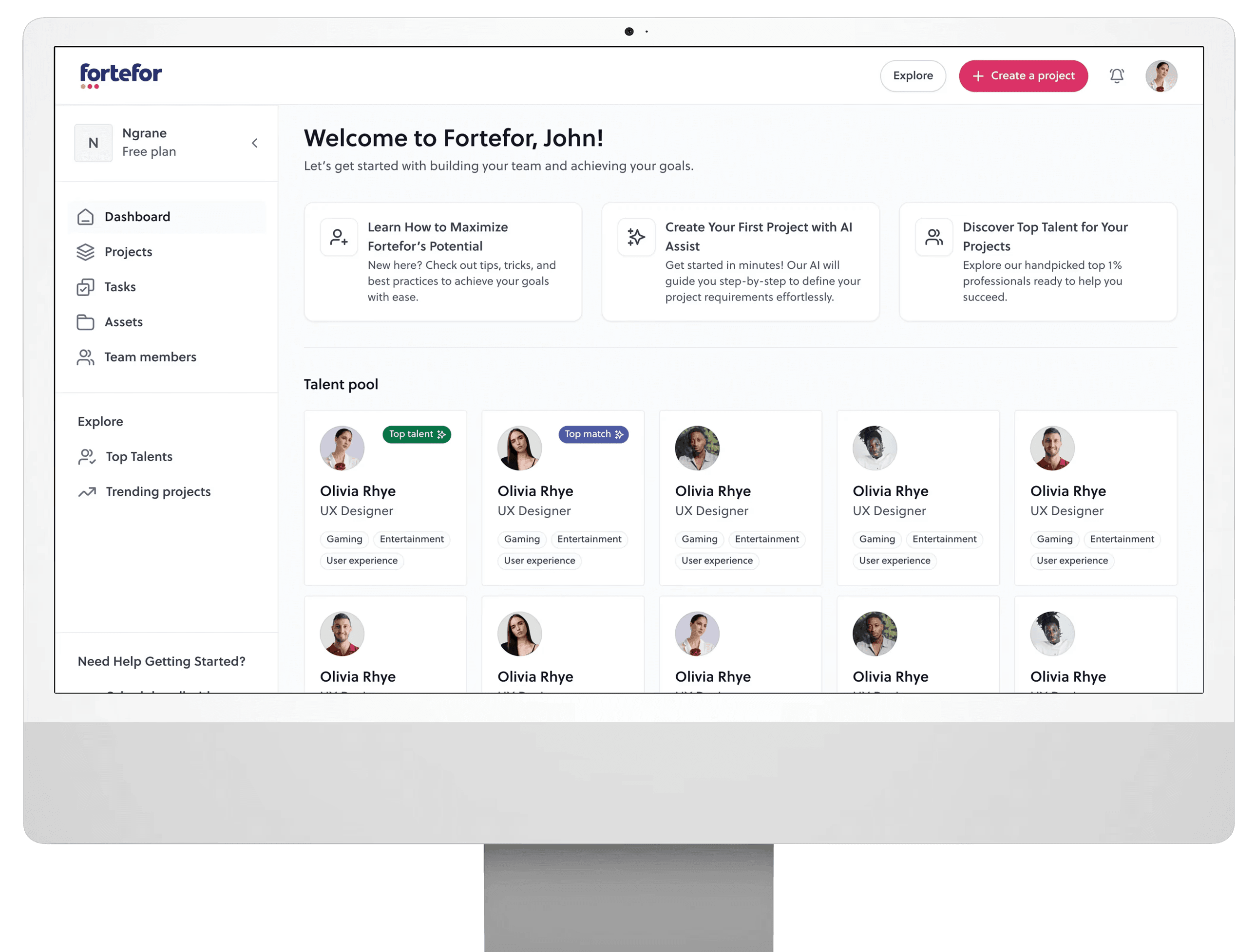
Fortefor is a freelance platform that connected clients with creative professionals through a manual "design concierge" — staff handled all consultations, matching and coordination within a limited internal network.
Challenge
The manual coordination required 3 hours per project, capping the platform’s capacity at just 5 concurrent projects.
The goal was to transform this manual workflow into a scalable self-service experience that could support 10x more concurrent projects while maintaining transparency and trust between clients and freelancers.
My role
UX/Product Designer.
Designed core MVP user flows and interfaces within an Agile team.
For 6 weeks mid-project, I worked independently with the Creative Director and developers, leading sprint reviews and presenting design decisions.
Team & Timeline
Ngrane Agency, Amsterdam
(6 months, Feb – July 2025)
Creative Director (client), Business Director (client), Business Strategist, Senior UX Designer, Junior Designer, 3 Developers
From business
problem to design priority
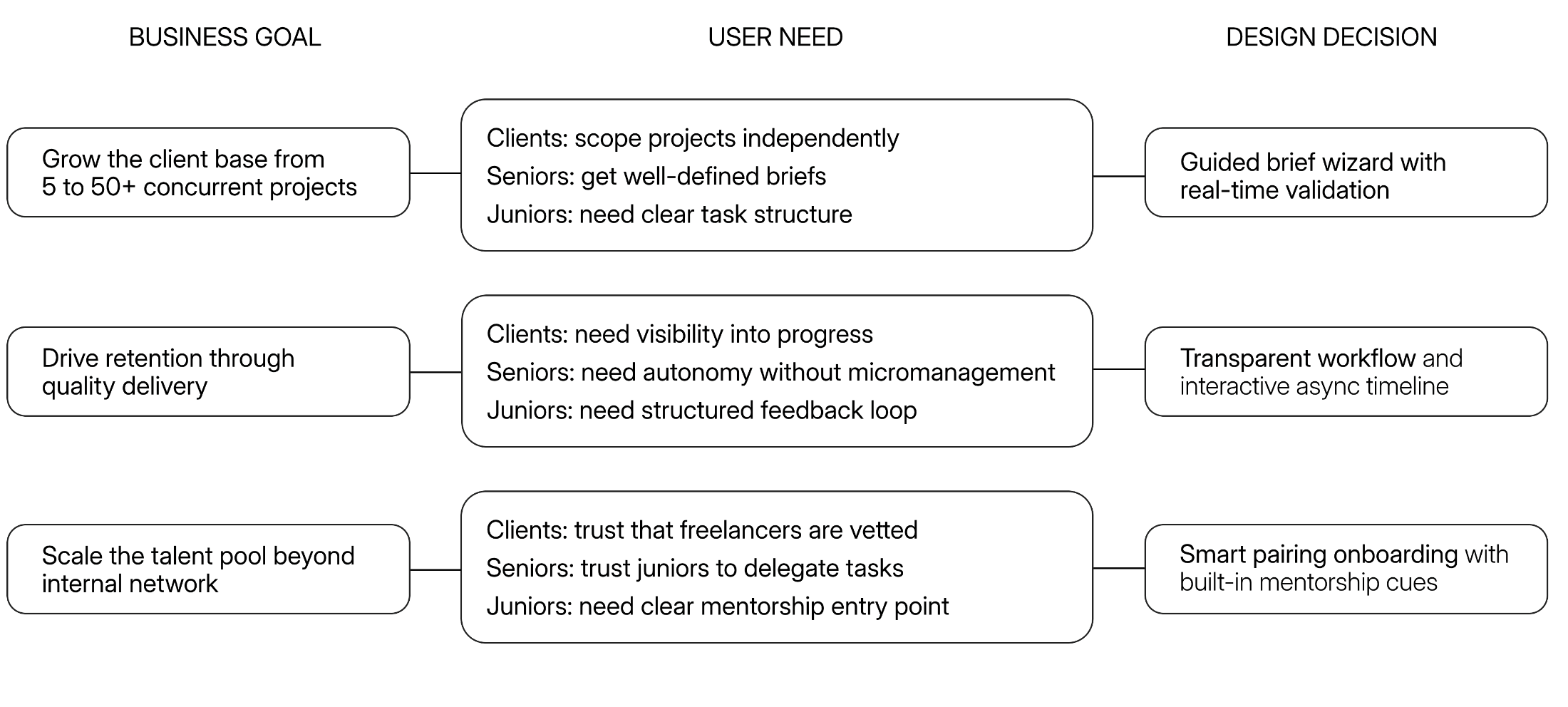
To scale the platform without adding operational staff,
I translated high-level business goals into concrete
product requirements.
This framework directly connected every UX feature -
from the brief wizard to the smart onboarding flow -
to a validated user need and a strategic growth objective.
To scale the platform without adding operational staff,
I translated high-level business goals into concrete
product requirements.
This framework directly connected every UX feature - from the brief wizard to the smart onboarding flow - to a validated user need and a strategic growth objective.
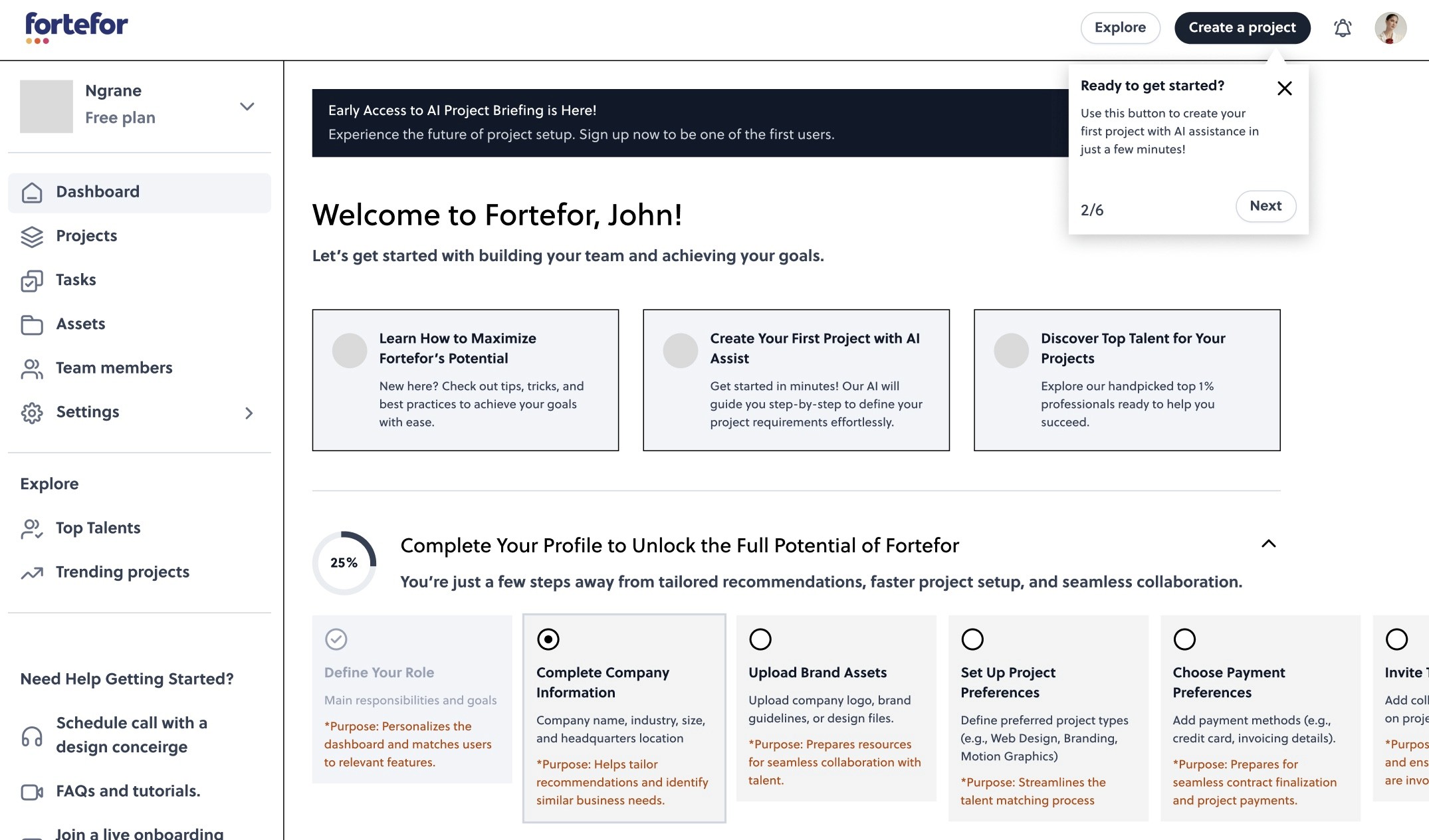
Sprint 1
role-based onboarding
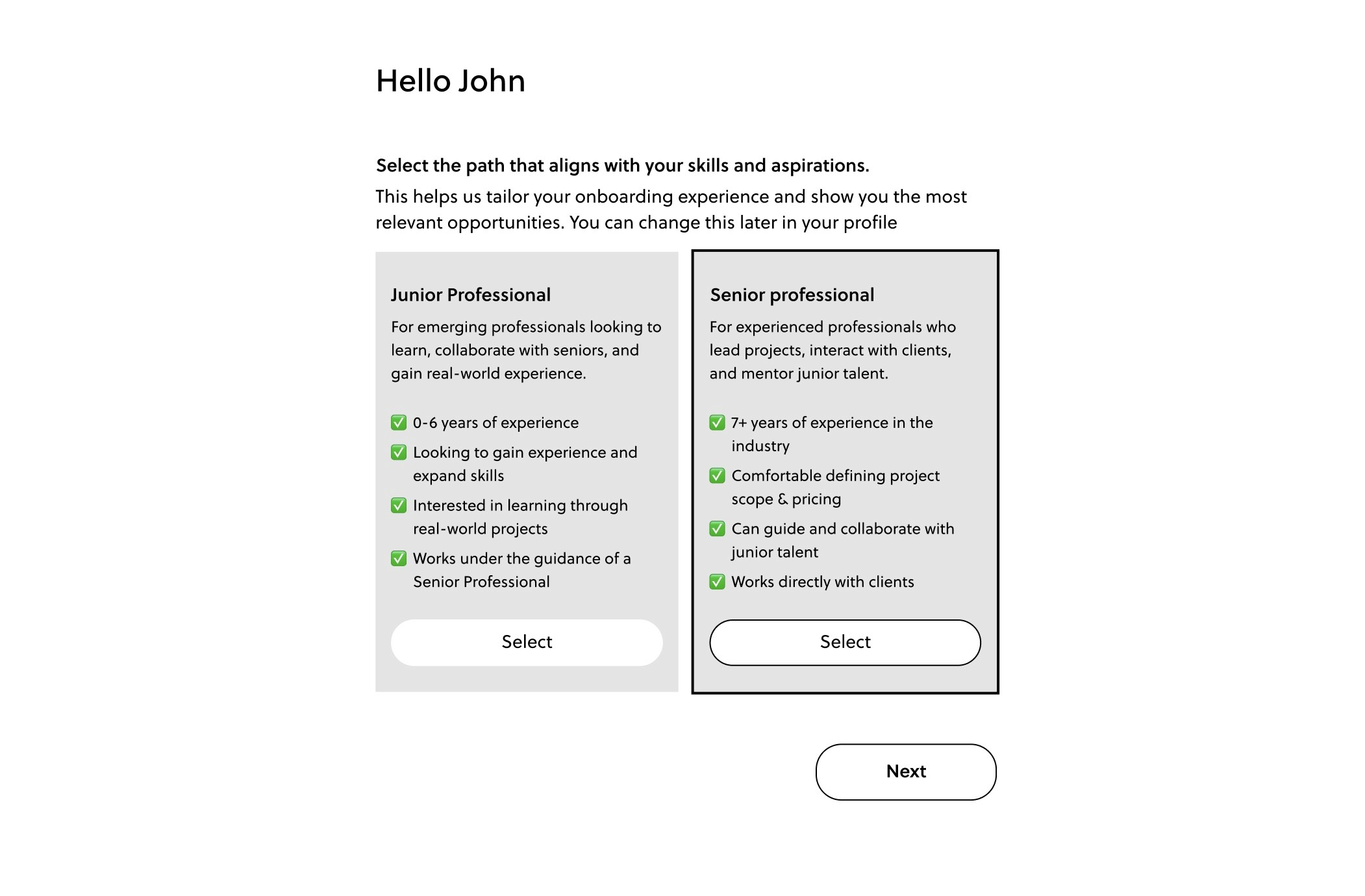
The platform serves three fundamentally different user types. Without role clarity at entry, every subsequent interaction risks misalignment.
Solution: a role-first onboarding that routes users into tailored experiences from the first screen. Clients see the value of
posting projects. Freelancers see the value of applying.
Neither has to figure out where they belong.
The platform serves three fundamentally different user types. Without role clarity at entry, every subsequent interaction risks misalignment.
Solution: a role-first onboarding that routes users into tailored experiences from the first screen. Clients see the value of
posting projects. Freelancers see the value of applying.
Neither has to figure out where they belong.
From business problem
to design priority
To scale the platform without adding operational staff, I translated high-level business goals into concrete product requirements.
This framework directly connected every UX feature - from the brief wizard to the smart onboarding flow - to a validated user need and a strategic growth objective.
Sprint 1
role-based onboarding
The platform serves three fundamentally different user types. Without role clarity at entry, every subsequent interaction risks misalignment.
Solution: a role-first onboarding that routes users into tailored experiences from the first screen. Clients see the value of
posting projects. Freelancers see the value of applying.
Neither has to figure out where they belong.
Sprint 4
integrated async
workspace
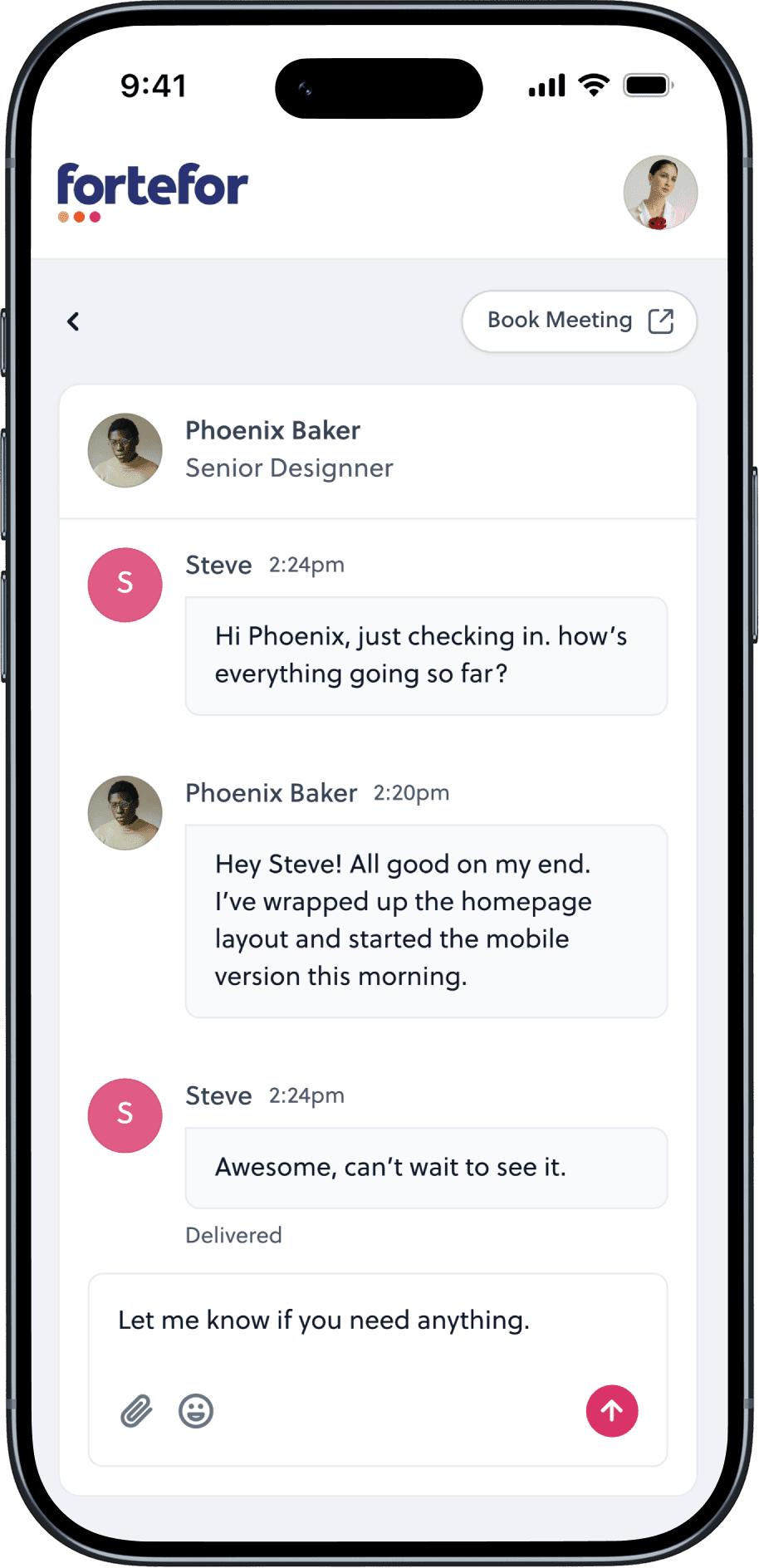
6 out of 8 research participants cited tool fragmentation as a core collaboration barrier — conversations in WhatsApp, files in email, status updates in separate calls.
Solution: a unified project environment where messages, files, quotes, and deliverables coexist within a single workspace. Every action automatically updates the shared project timeline, replacing manual coordination with transparent, self-documenting collaboration.
Sprint 3
transparent matching
& workflow
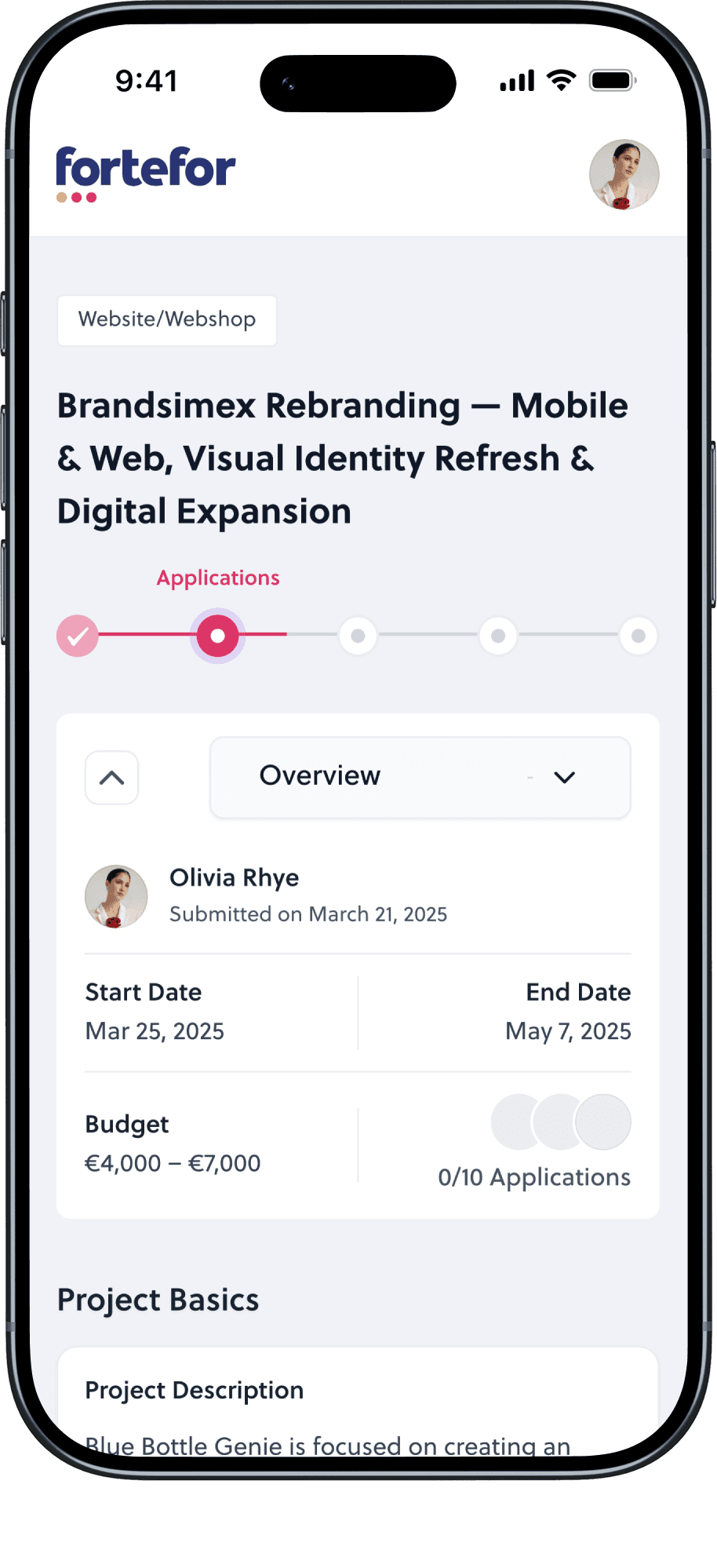
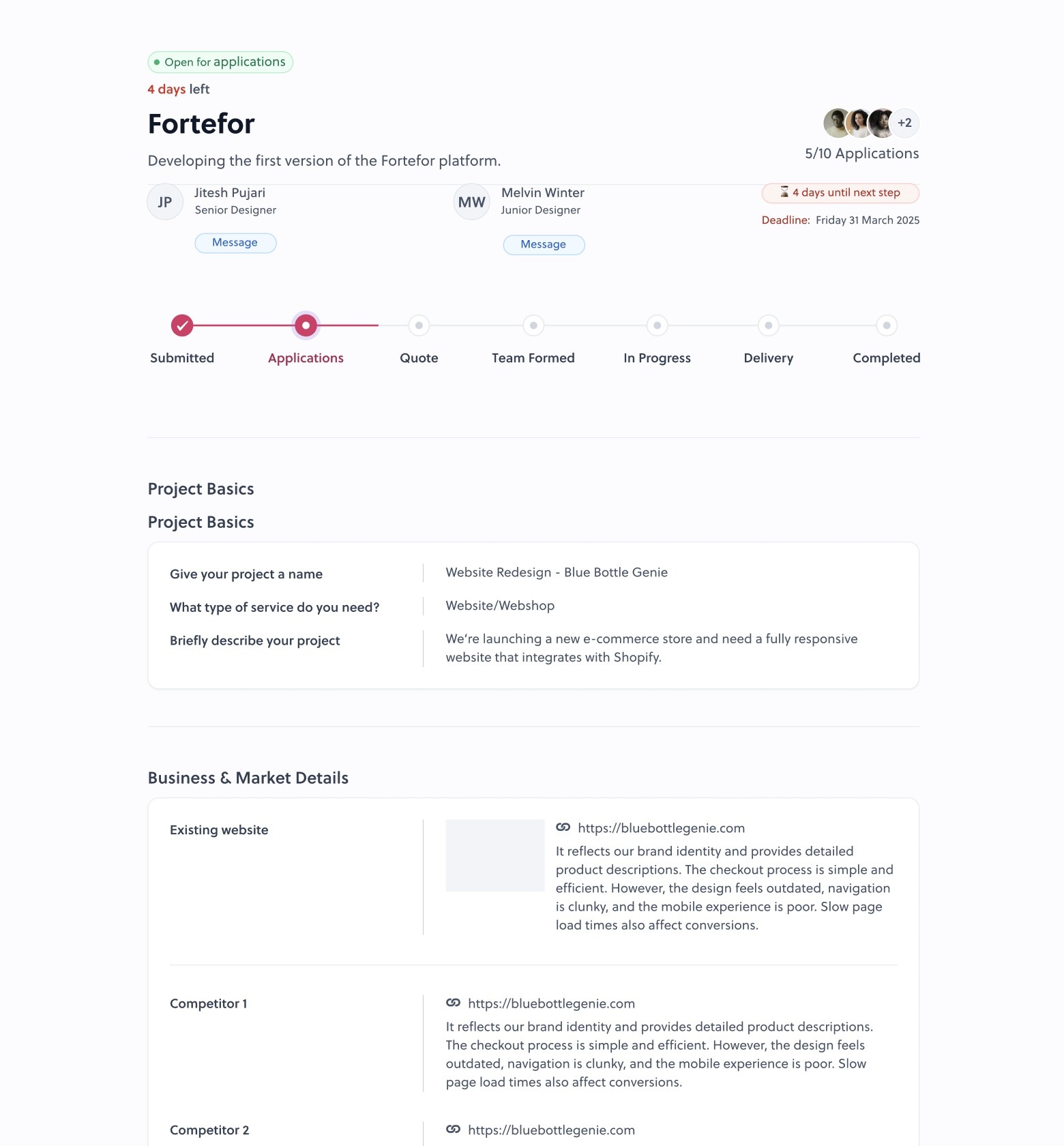
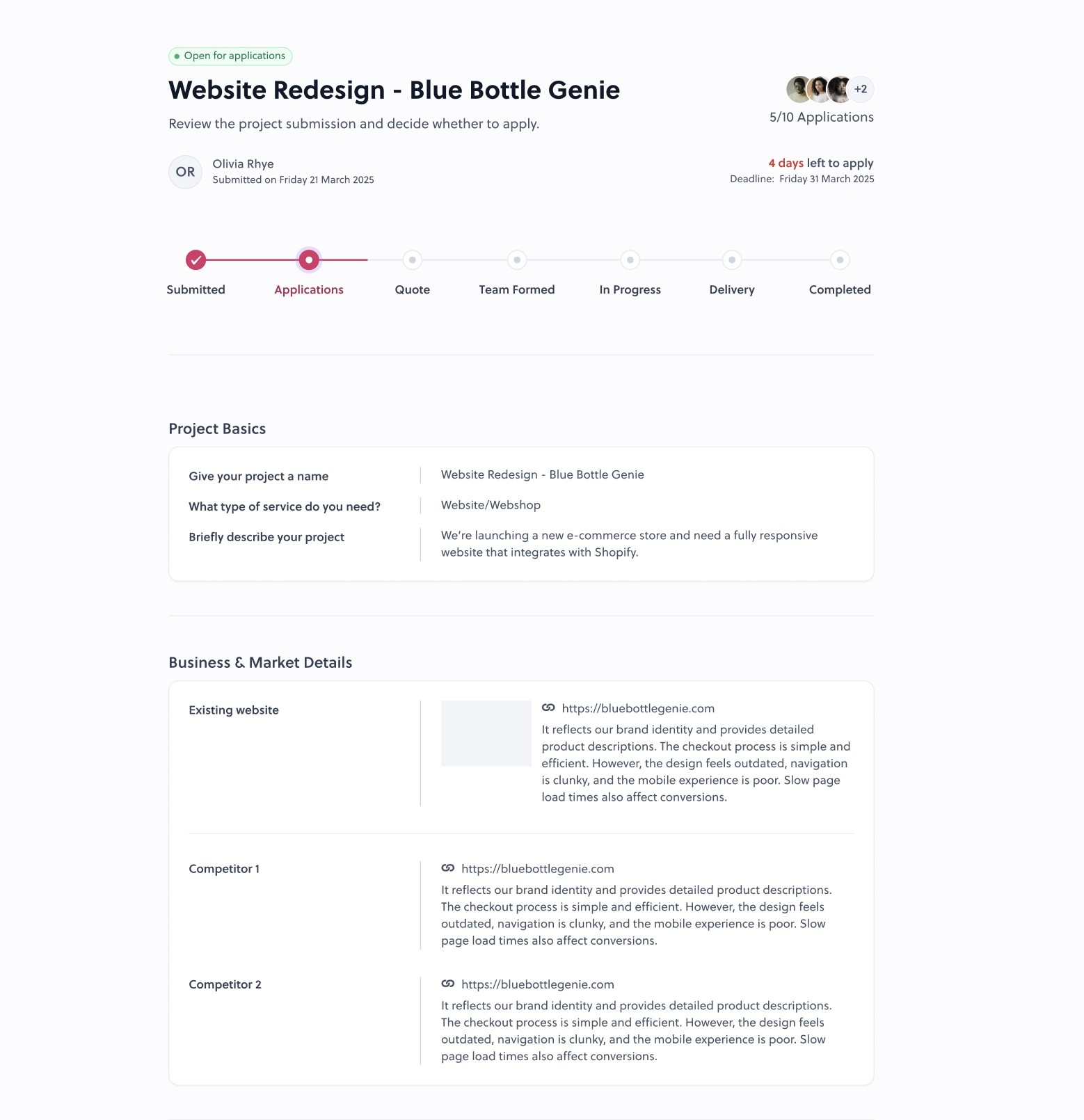
Freelancers reported that opaque matching eroded trust before collaboration even began. Clients couldn't track progress without requesting updates.
Solution: a structured project feed with clear metadata (deadline, budget, service type) giving freelancers full context before applying. Combined with event-driven progress tracking, when a quote is approved, the project advances automatically, every stakeholder always knows the current state without manual reporting.
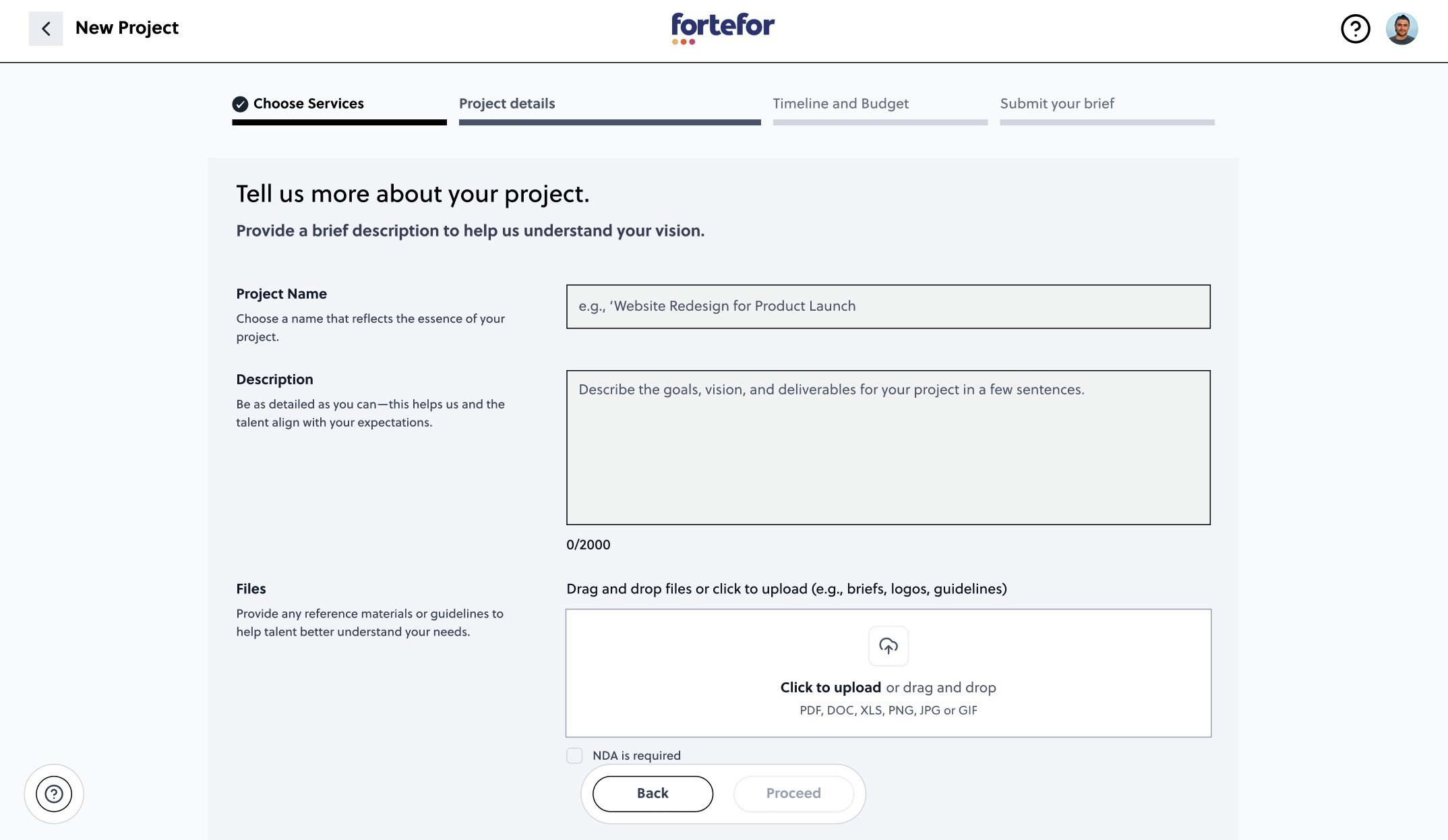
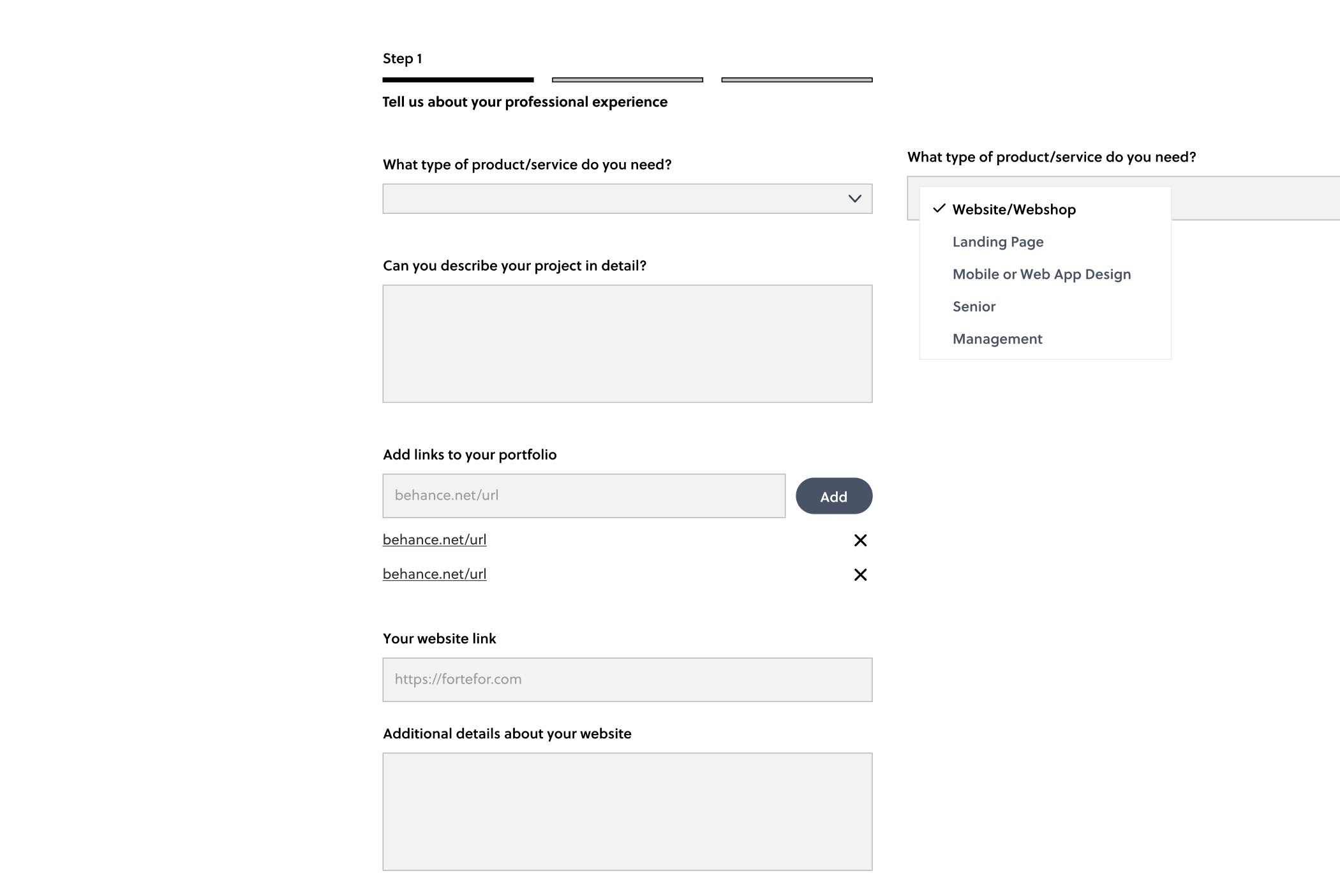
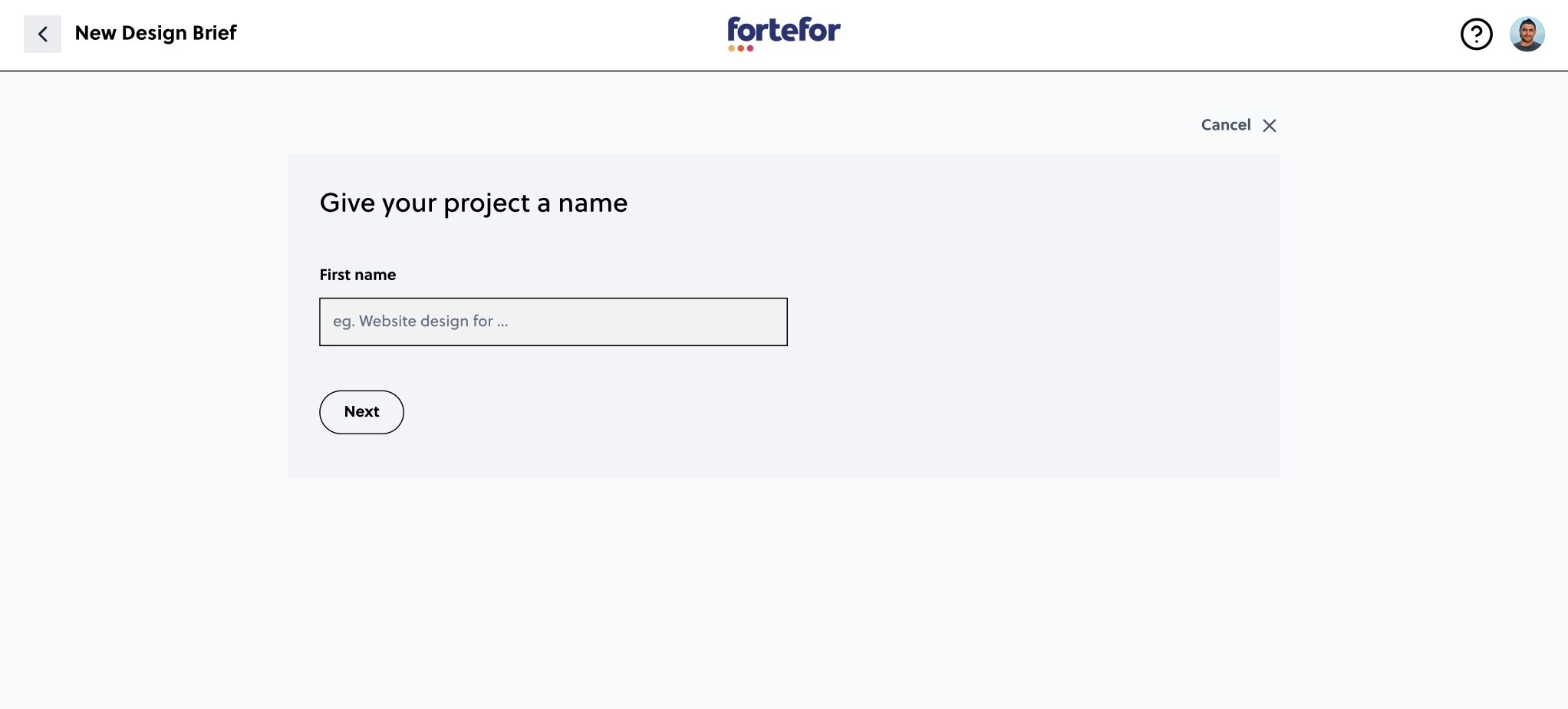
Sprint 2
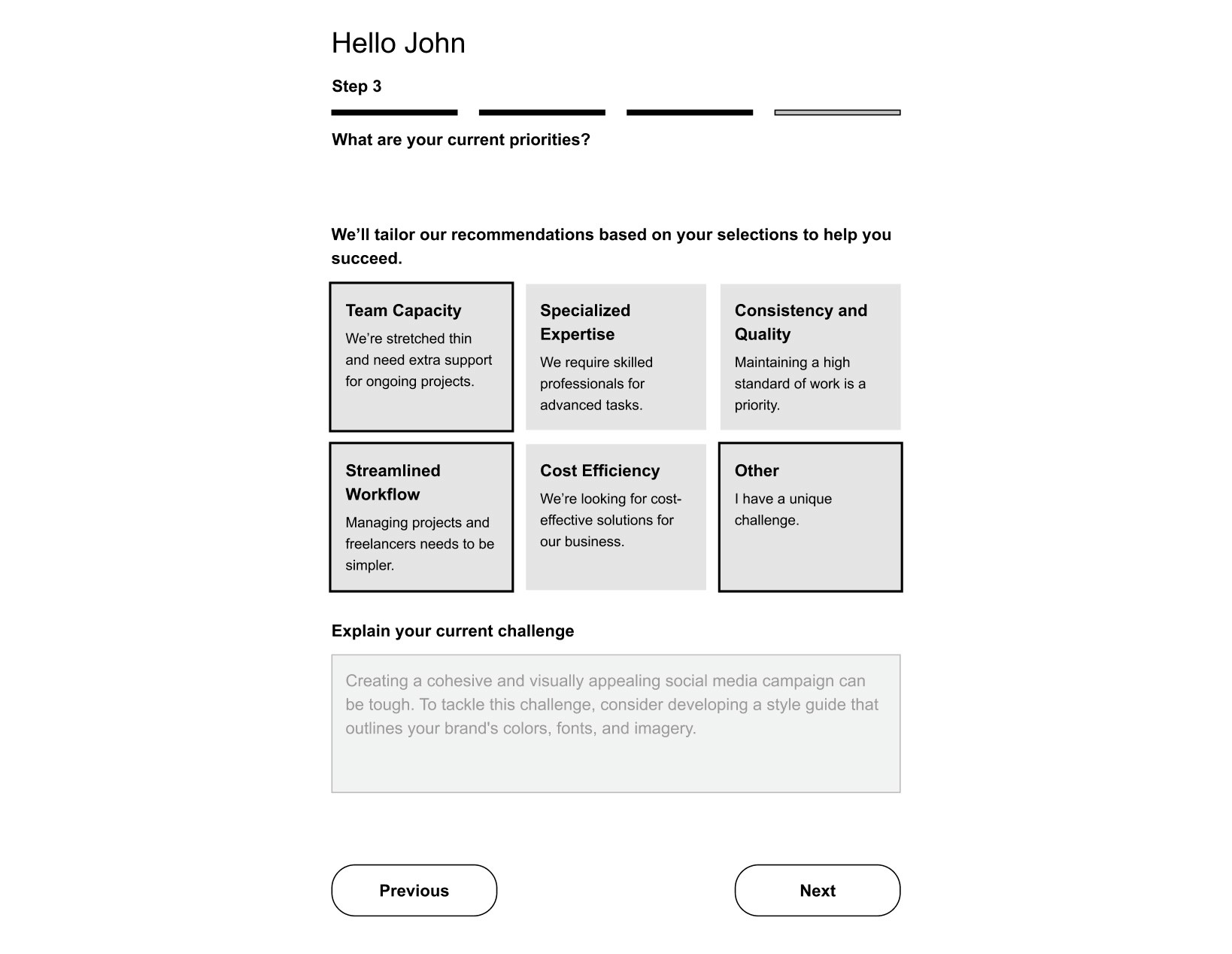
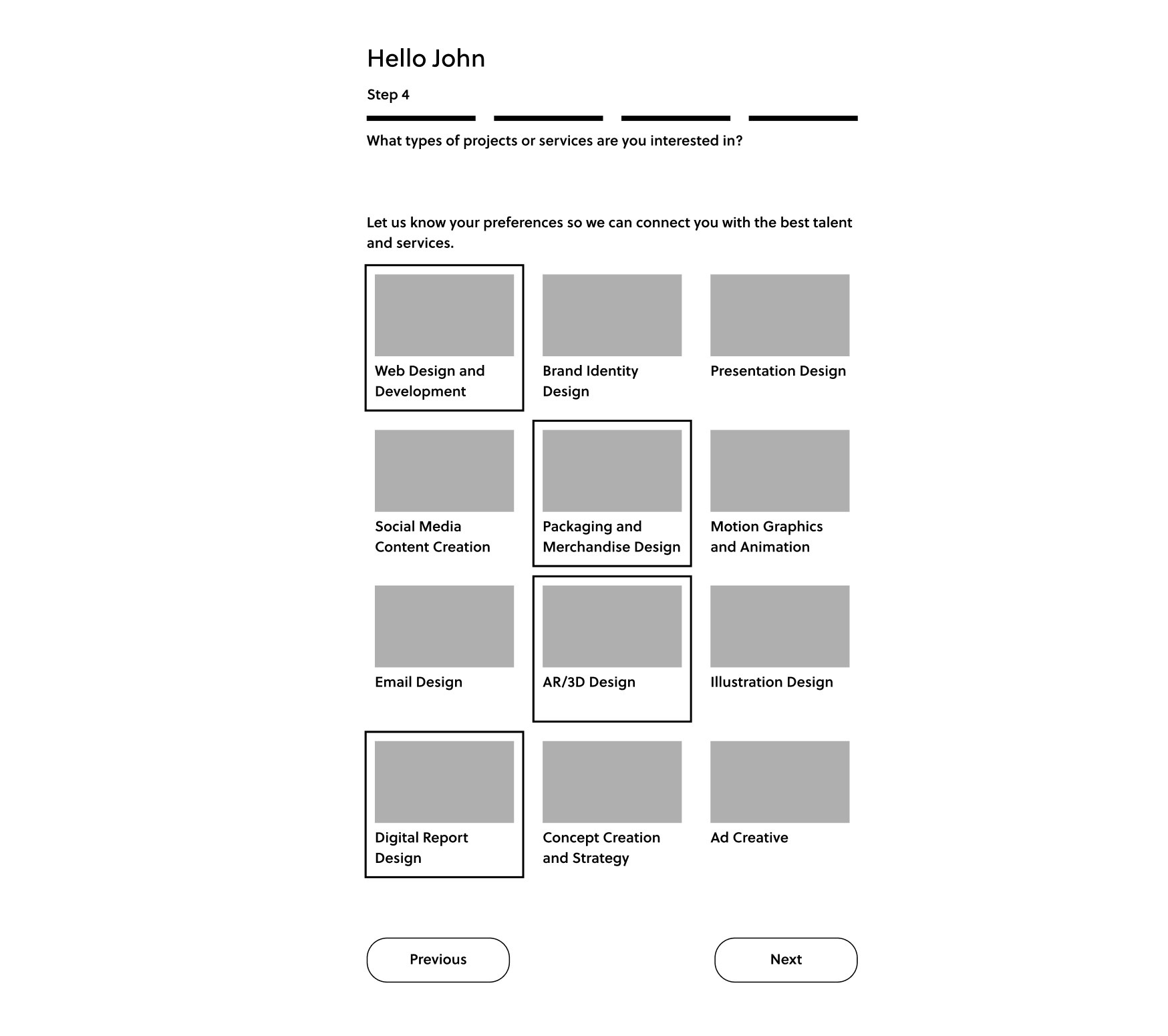
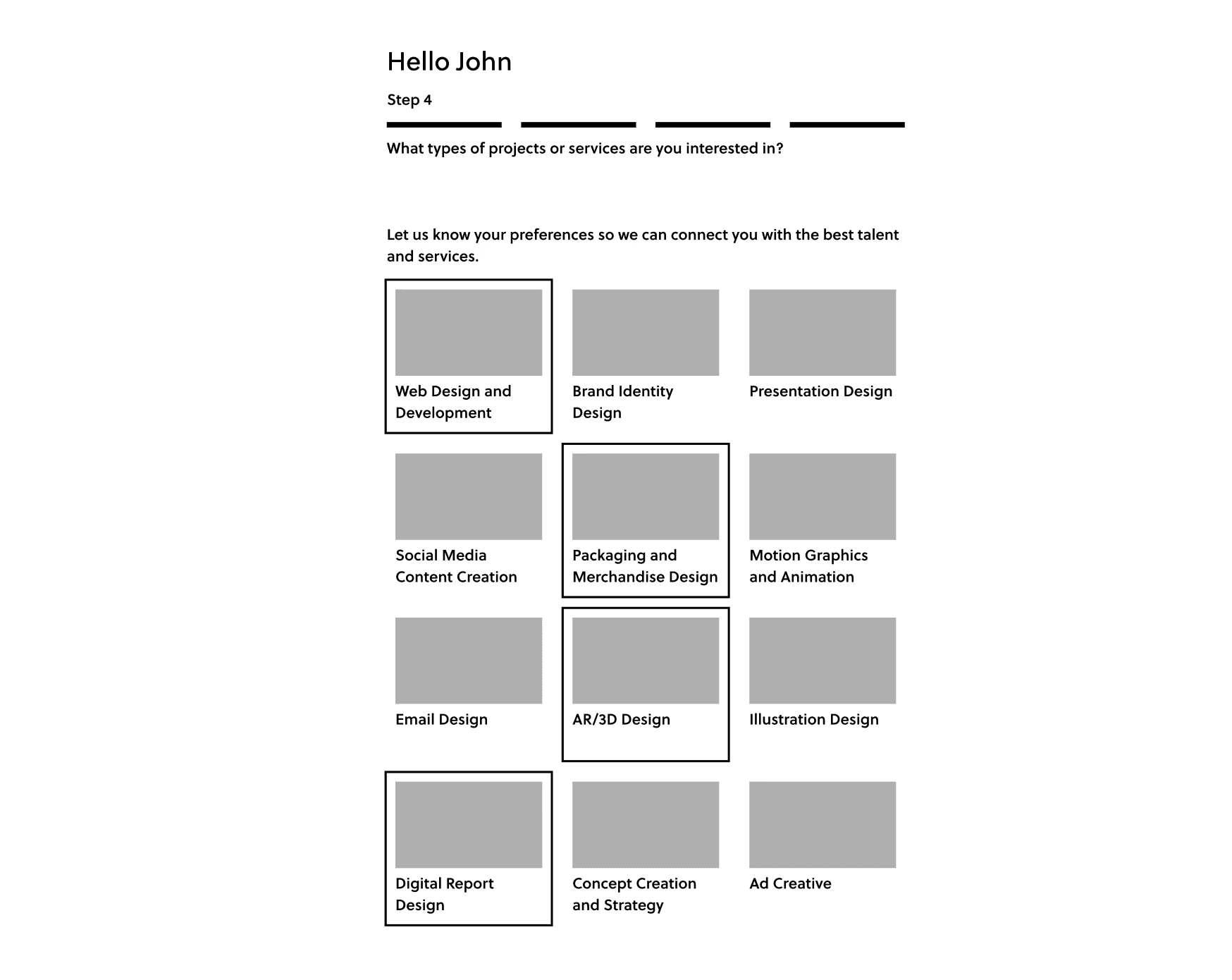
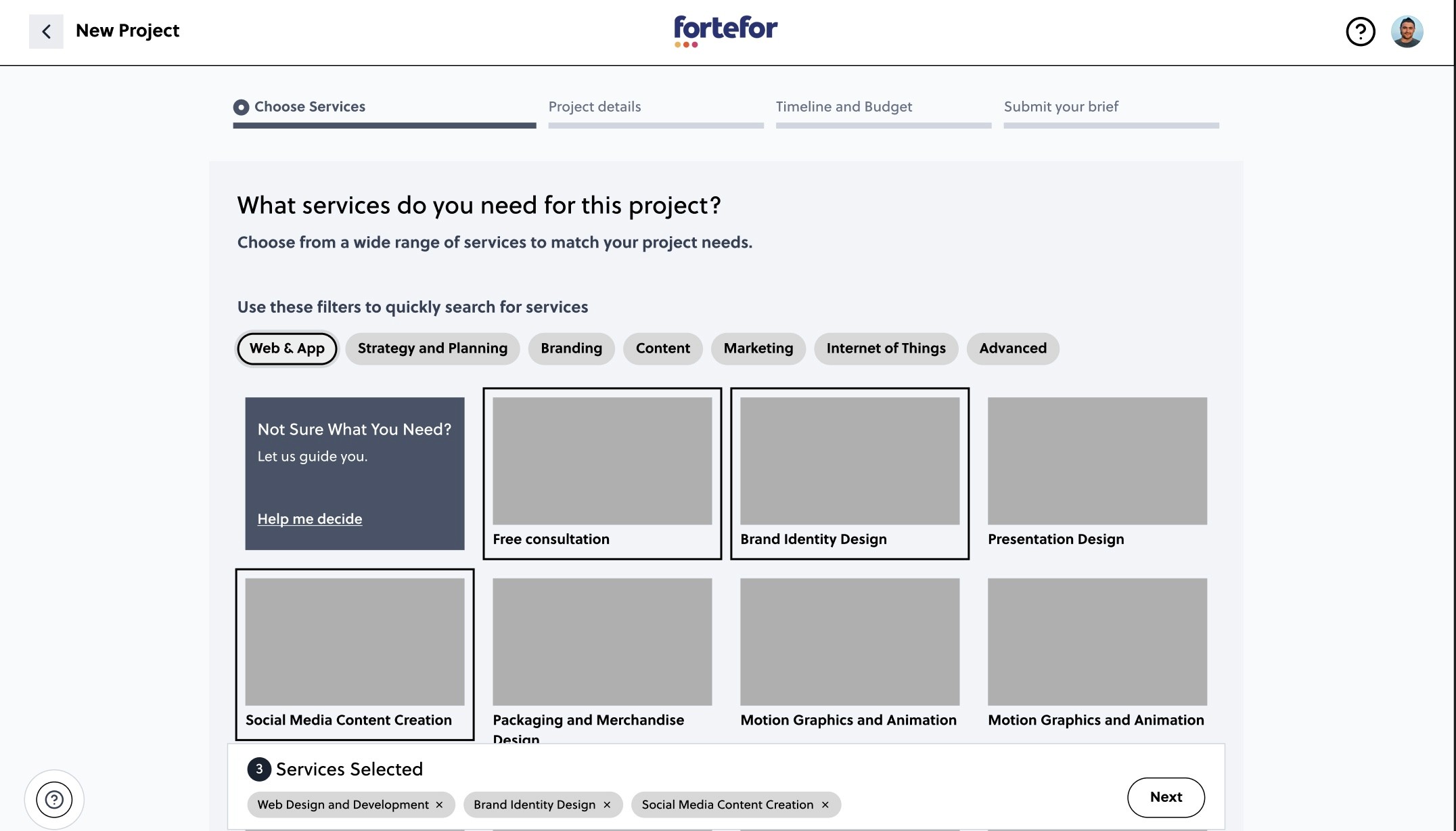
guided project brief
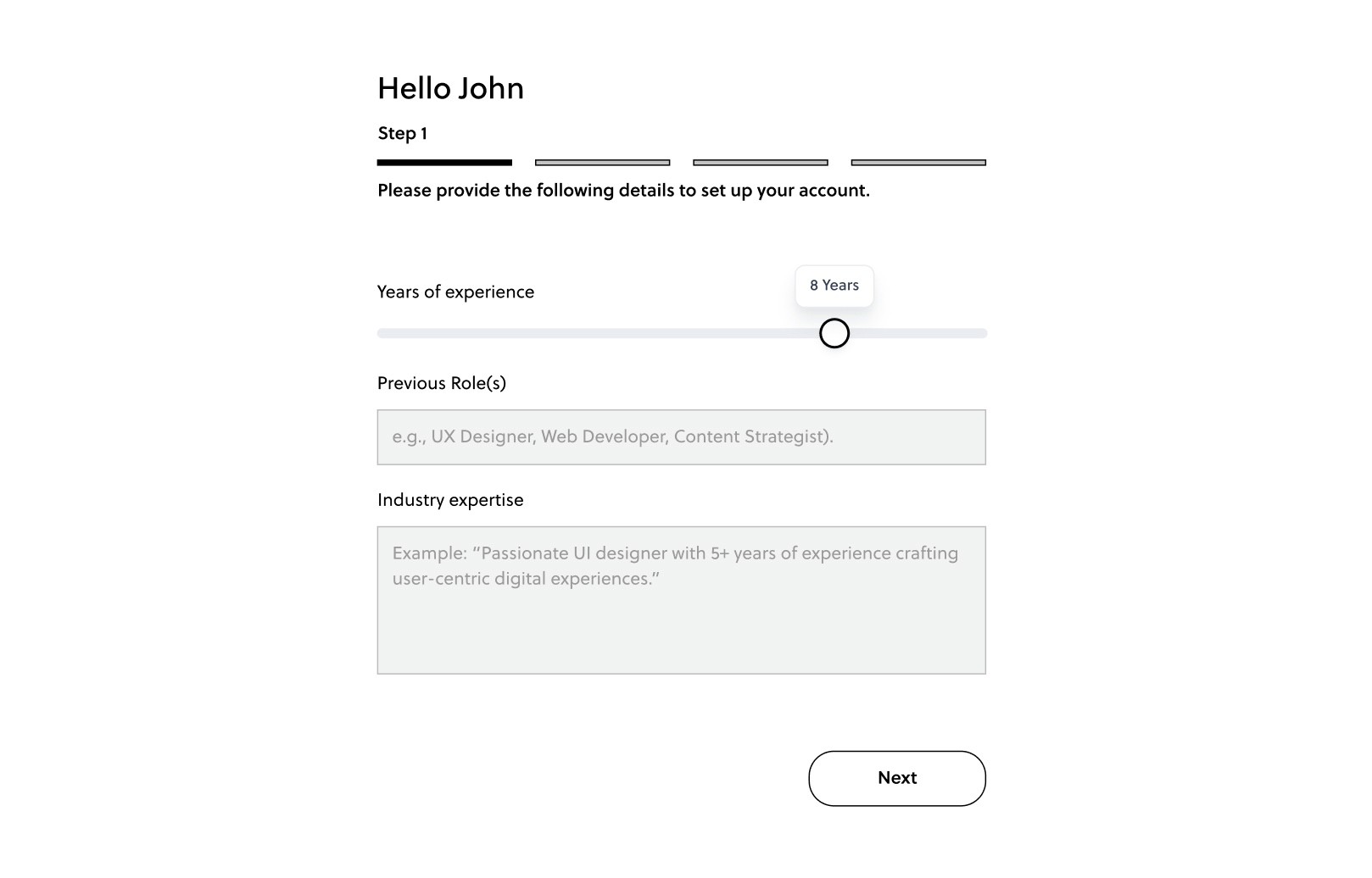
Research showed clients consistently struggled to articulate project scope without assistance. The old model required a 3-hour consultation call to capture what the brief wizard now captures independently.
Generated and tested diverse placeholder copy archetypes using LLMs (ChatGPT/Claude) to rapidly simulate how different creative industries (video, branding, tech) would interact with the smart brief wizard. This cut user-testing prep time by 40%.
Solution: a structured, step-by-step brief flow with contextual guidance at each field. Placeholder copy reduces cognitive load and models what good input looks like, without requiring design expertise from the client.
Challenges
Embracing friction and stepping up to lead
Midway through the project, our Senior UX Designer went on leave for 6 weeks.
With no design lead, I stepped into the ambiguity and took full ownership of the product design vision.
Daring to fail and pivot
During Sprint 3, my initial dashboard design for progress tracking proved too clinical and failed to resonate in user testing. Rather than playing it safe with minor tweaks, I completely threw out the standard table view and co-created an unconventional, interactive timeline layout with developers during an intensive 1-day sprint.
Takeaway
This high-pressure environment accelerated my stakeholder management and design advocacy skills. It taught me that creativity is rarely a linear process, and that clarity of rationale and the courage to pivot matter far more than seniority of title.
Results: self-service validated
Scaling 10x
platform structure successfully validated to support 50+ concurrent projects without requiring additional operational staff. The smart brief wizard completely eliminated the need for manual staff consultations during testing.
Driving retention through quality delivery
achieved a 100% task completion rate across all testing user groups. All participants identified their next required action without external guidance, drastically reducing friction at every project handover point.
Scaling the talent pool beyond the network
Junior freelancers reported increased confidence due to visible mentorship cues and structured review points built into the workspace workflow.
The final MVP was accepted by Ngrane leadership and successfully handed off to the engineering team for development.






Sprint 2
guided project brief
Research showed clients consistently struggled to articulate project scope without assistance. The old model required a 3-hour consultation call to capture what the brief wizard now captures independently.
Generated and tested diverse placeholder copy archetypes using LLMs (ChatGPT/Claude) to rapidly simulate how different creative industries (video, branding, tech) would interact with the smart brief wizard. This cut user-testing prep time by 40%.
Solution: a structured, step-by-step brief flow with contextual guidance at each field. Placeholder copy reduces cognitive load and models what good input looks like, without requiring design expertise from the client.
Sprint 3
transparent matching
& workflow
Freelancers reported that opaque matching eroded trust before collaboration even began. Clients couldn't track progress without requesting updates.
Solution: a structured project feed with clear metadata (deadline, budget, service type) giving freelancers full context before applying. Combined with event-driven progress tracking, when a quote is approved, the project advances automatically, every stakeholder always knows the current state without manual reporting.
Sprint 4
integrated async
workspace
6 out of 8 research participants cited tool fragmentation
as a core collaboration barrier — conversations in WhatsApp, files in email, status updates in separate calls.
Solution: a unified project environment where messages, files, quotes, and deliverables coexist within a single workspace. Every action automatically updates the shared project timeline, replacing manual coordination with transparent, self-documenting collaboration.
6 out of 8 research participants cited tool fragmentation as a core collaboration barrier — conversations in WhatsApp, files in email, status updates in separate calls.
Solution: a unified project environment where messages, files, quotes, and deliverables coexist within a single workspace. Every action automatically updates the shared project timeline, replacing manual coordination with transparent, self-documenting collaboration.
Challenges
Embracing friction and stepping up to lead
Midway through the project, our Senior UX Designer went on leave for 6 weeks.
With no design lead, I stepped into the ambiguity and took full ownership of the product design vision.
Daring to fail and pivot
During Sprint 3, my initial dashboard design for progress tracking proved too clinical and failed to resonate in user testing. Rather than playing it safe with minor tweaks, I completely threw out the standard table view and co-created an unconventional, interactive timeline layout with developers during an intensive 1-day sprint.
Takeaway
This high-pressure environment accelerated my stakeholder management and design advocacy skills. It taught me that creativity is rarely a linear process, and that clarity of rationale and the courage to pivot matter far more than seniority of title.
Results: self-service validated
Scaling 10x
platform structure successfully validated to support 50+ concurrent projects without requiring additional operational staff. The smart brief wizard completely eliminated the need for manual staff consultations during testing.
Driving retention through quality delivery
achieved a 100% task completion rate across all testing user groups. All participants identified their next required action without external guidance, drastically reducing friction at every project handover point.
Scaling the talent pool beyond the network
Junior freelancers reported increased confidence due to visible mentorship cues and structured review points built into the workspace workflow.
The final MVP was accepted by Ngrane leadership and successfully handed off to the engineering team for development.